ON THE FORES FRONT
Photography by: Michael Darter
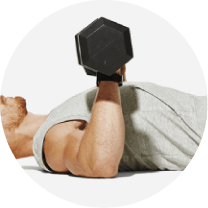
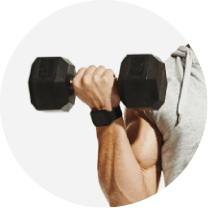
What is the best way to build your forearms? Wrist curls and extensions? Well, those are certainly the most popular methods but that's only for a lack of creativity and the sad relegation of forearms to a silent bodypart in the quest for a better physique. It's time to get your forearms growing. And there are far more ways to do it than you might think.
While hang-holding objects for grip is reliable for building a vise-like grip, for size improvement, you need to follow the same basic rules of development that you use for your other muscles: use heavier weight, perform fewer reps and add lots of volume to your program.
Sure you can do the standard wrist curls and extensions with heavy dumbbells or even a few sets of hammer curls. Or, you can do a few extra things and really see your forearms grow. First, check out clubbells. While most gyms do not have them, you can get yourself a couple different sizes and do some hammer extensions and flexions (known as abduction and adduction) as well as pronating and supinating your arm extended out from supports.
If you don't want to buy clubbells, disassemble one side of your dumbbell or grab a short-bar attachment and you are ready to rock.
Another underused method of building grip and forearm strength is the towel pull-up. Hang a towel over a high bar, grab tight at either end and do your pull-ups.
Another solid forearm incorporator is the fat bar, a standard length barbell that is a little thicker in diameter than the standard 1-inch Olympic barbell. You perform exercises with a fat bar just the same except that the barbell is much harder to hold since your thumb and fingers can't overlap. This forces the wrist flexors to fire on every rep just to keep your grip.
Treat your forearms like you would your biceps and triceps. Hit them hard for 8-12 reps using a challenging weight for 3-4 sets on a variety of exercises.
CLUBBED MASS
If you're tired of gimmicky grip gadgets and are looking for something dynamic and novel to fill out your forearms, you might want to give clubbells a try. These top-heavy, tapered weights allow you to work your grip, wrists and forearms through various planes, making them our fave implement for training this bodypart. They range in size from 5 pounds to 45 pounds, although we recommend using the lighter clubbells (5 or 10 pounds, depending on your level of strength) for your forearm work. They're not the cheapest weights in the world - prices start at $84.95 - but their versatility and durability make it worth the stretch. www.clubbell.tv
The All-Clubbell Forearm Routine
Cable wrist curl to hold
Stand midway between two weight stacks holding two low-pulley D-handles out to your sides, palms down. Roll the handle as far out into your hands as possible before using your wrists to curl the weight back toward your forearms. Aim for a weight that causes positive muscle failure in the prescribed rep range. After completing the final rep, simply hold the weight in a neutral position for an additional 30-60 seconds - as prescribed - to round out the set.
Wrist supination/pronation
Pick up a short, straight bar attachment or light clubbell and stand holding it at one end, arm bent at a 90-degree angle, your elbow pinned to your side. Starting with the attachment perpendicular to the ceiling and without moving your elbow, slowly rotate your wrist in toward your body (pronation) until the bar is parallel to the ground. Pause for a count and rotate your wrist back the other direction (supination) until the bar is again parallel to the ground. This constitutes one full repetition. Complete the prescribed number of reps before switching arms.
Weighted wrist abduction
Stand holding a short, straight bar attachment or light clubbell at your side, elbow pinned to your ribs, the heavy end of the bar pointed down and nearly perpendicular to the floor in front of you. Bending only at your wrist and keeping the weight in line with your forearm, raise the bar up to a point at or just above parallel to the floor. Pause for a peak contraction and lower it back to the starting position before repeating for reps.
Weighted wrist adduction
Stand holding a short, straight bar attachment or clubbell at your side, elbow pinned to your ribs, the heavy end of the bar pointed down and nearly perpendicular to the floor behind you. Bending only at your wrist and keeping the weight in line with your forearm, raise the bar up to a point at or just above parallel to the floor. Pause for a peak contraction and lower it back to the starting position before repeating for reps.
Around the Clock
Stand holding a short, straight bar attachment or clubbell at your side, elbow pinned to your ribs, the heavy end of the bar pointed down and nearly perpendicular to the floor in front of you. Bending only at your wrist, slowly raise the bar as high as you can, in line with your arm (as with wrist abduction). Making that point 12 o'clock, slowly rotate the weight clockwise as wide as you can on an imaginary clock in front of you. Returning to 12 o'clock constitutes one full rep. Completing all reps in each direction makes up one full set.
>> David Sandler, MS, CSCS is the director of StrengthPro, Inc., a Las Vegas-based sports-performance consulting group. For more info, visit www.strengthpro.com.
RELATED ARTICLES:
ABS, CALVES & FOREARMS DAY
ATTACKING UNDERTRAINED BODYPARTS
ADVANCED TRAINING: WEIDER PRINCIPLES
While hang-holding objects for grip is reliable for building a vise-like grip, for size improvement, you need to follow the same basic rules of development that you use for your other muscles: use heavier weight, perform fewer reps and add lots of volume to your program.
Sure you can do the standard wrist curls and extensions with heavy dumbbells or even a few sets of hammer curls. Or, you can do a few extra things and really see your forearms grow. First, check out clubbells. While most gyms do not have them, you can get yourself a couple different sizes and do some hammer extensions and flexions (known as abduction and adduction) as well as pronating and supinating your arm extended out from supports.
If you don't want to buy clubbells, disassemble one side of your dumbbell or grab a short-bar attachment and you are ready to rock.
Another underused method of building grip and forearm strength is the towel pull-up. Hang a towel over a high bar, grab tight at either end and do your pull-ups.
Another solid forearm incorporator is the fat bar, a standard length barbell that is a little thicker in diameter than the standard 1-inch Olympic barbell. You perform exercises with a fat bar just the same except that the barbell is much harder to hold since your thumb and fingers can't overlap. This forces the wrist flexors to fire on every rep just to keep your grip.
Treat your forearms like you would your biceps and triceps. Hit them hard for 8-12 reps using a challenging weight for 3-4 sets on a variety of exercises.
Exercise Sets/Reps Towel pull-ups (weighted) 3/8 Fat-bar curl 3/10 Hammer curl 3/10 4-way clubbell+ 3/10+ A giant set consisting of extension, flexion, adduction and abduction.
CLUBBED MASS
If you're tired of gimmicky grip gadgets and are looking for something dynamic and novel to fill out your forearms, you might want to give clubbells a try. These top-heavy, tapered weights allow you to work your grip, wrists and forearms through various planes, making them our fave implement for training this bodypart. They range in size from 5 pounds to 45 pounds, although we recommend using the lighter clubbells (5 or 10 pounds, depending on your level of strength) for your forearm work. They're not the cheapest weights in the world - prices start at $84.95 - but their versatility and durability make it worth the stretch. www.clubbell.tv
The All-Clubbell Forearm Routine
Exercise Sets/Reps Cable wrist curl to hold 3/30-60 sec Weighted supination/pronation 3/10-12 Weighted wrist abduction 3/10-12 Weighted wrist adduction 3/10-12 Around the clock 3/10-12Clubbell Exercise Descriptions
Cable wrist curl to hold
Stand midway between two weight stacks holding two low-pulley D-handles out to your sides, palms down. Roll the handle as far out into your hands as possible before using your wrists to curl the weight back toward your forearms. Aim for a weight that causes positive muscle failure in the prescribed rep range. After completing the final rep, simply hold the weight in a neutral position for an additional 30-60 seconds - as prescribed - to round out the set.
Wrist supination/pronation
Pick up a short, straight bar attachment or light clubbell and stand holding it at one end, arm bent at a 90-degree angle, your elbow pinned to your side. Starting with the attachment perpendicular to the ceiling and without moving your elbow, slowly rotate your wrist in toward your body (pronation) until the bar is parallel to the ground. Pause for a count and rotate your wrist back the other direction (supination) until the bar is again parallel to the ground. This constitutes one full repetition. Complete the prescribed number of reps before switching arms.
Weighted wrist abduction
Stand holding a short, straight bar attachment or light clubbell at your side, elbow pinned to your ribs, the heavy end of the bar pointed down and nearly perpendicular to the floor in front of you. Bending only at your wrist and keeping the weight in line with your forearm, raise the bar up to a point at or just above parallel to the floor. Pause for a peak contraction and lower it back to the starting position before repeating for reps.
Weighted wrist adduction
Stand holding a short, straight bar attachment or clubbell at your side, elbow pinned to your ribs, the heavy end of the bar pointed down and nearly perpendicular to the floor behind you. Bending only at your wrist and keeping the weight in line with your forearm, raise the bar up to a point at or just above parallel to the floor. Pause for a peak contraction and lower it back to the starting position before repeating for reps.
Around the Clock
Stand holding a short, straight bar attachment or clubbell at your side, elbow pinned to your ribs, the heavy end of the bar pointed down and nearly perpendicular to the floor in front of you. Bending only at your wrist, slowly raise the bar as high as you can, in line with your arm (as with wrist abduction). Making that point 12 o'clock, slowly rotate the weight clockwise as wide as you can on an imaginary clock in front of you. Returning to 12 o'clock constitutes one full rep. Completing all reps in each direction makes up one full set.
>> David Sandler, MS, CSCS is the director of StrengthPro, Inc., a Las Vegas-based sports-performance consulting group. For more info, visit www.strengthpro.com.
RELATED ARTICLES:
ABS, CALVES & FOREARMS DAY
ATTACKING UNDERTRAINED BODYPARTS
ADVANCED TRAINING: WEIDER PRINCIPLES